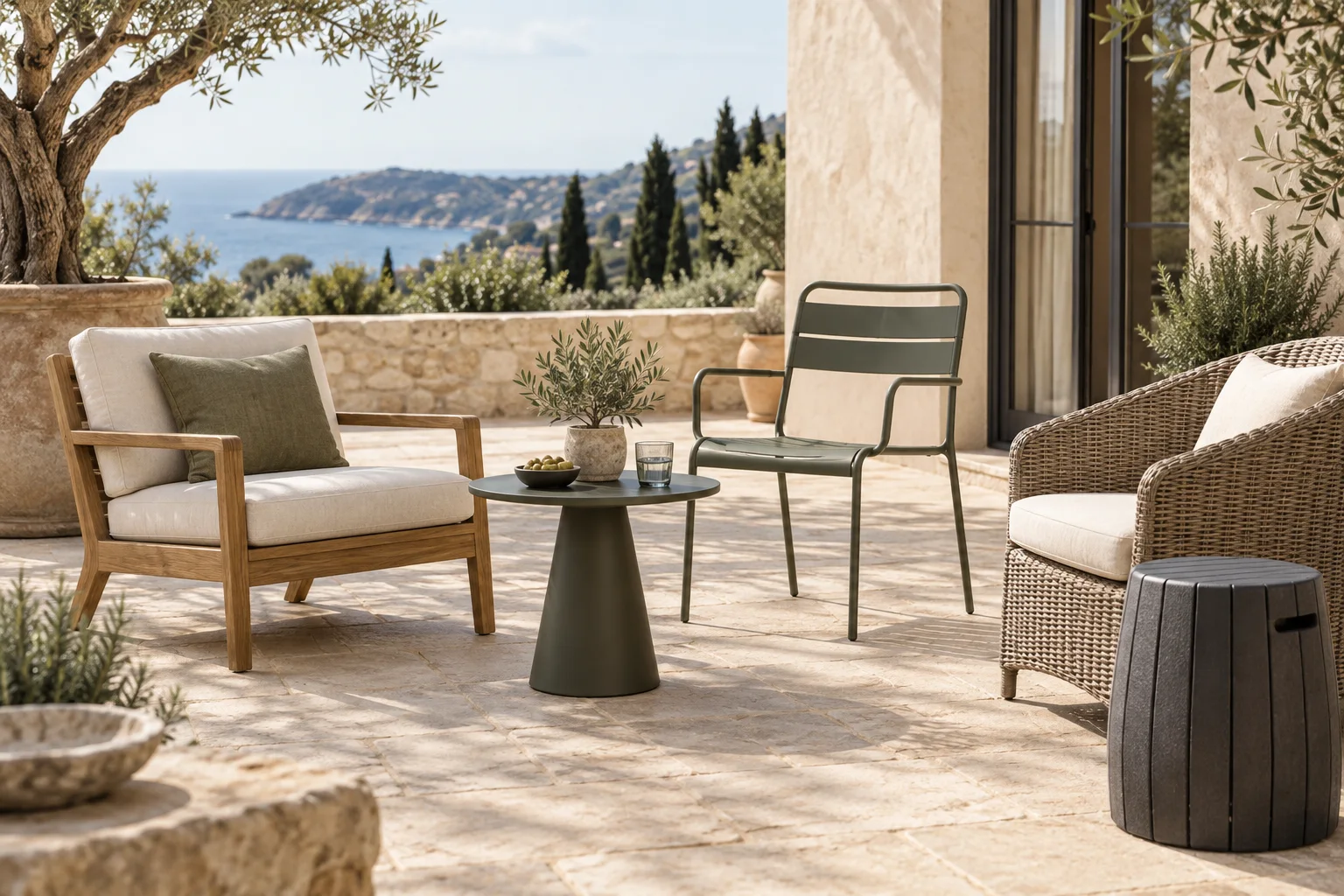
The best outdoor furniture material is not simply the one that survives rain. It is the one that suits your exposure, the weight you can manage, the maintenance you will actually do and the way you want the surface to age.
A sheltered terrace in a dry climate asks very little of a chair. An uncovered poolside setting near the sea asks much more. Before comparing colours or silhouettes, look at what the furniture will face every day: strong ultraviolet light, standing water, humidity, salt, wind, heat and repeated moving.
This guide compares the main material families so that you can make a decision for your space—not for an imaginary “average” patio.
Start with exposure, not appearance
Answer five questions before shopping:
- Is the furniture fully exposed, partly covered or stored between uses?
- Does the space receive intense afternoon sun?
- Is the air humid, salty or frequently wet?
- Does the furniture need to move often?
- How much cleaning, oiling or finish repair are you prepared to do?
These answers narrow the field quickly. A heavy material can be reassuring on a windy terrace but frustrating on a balcony where chairs move every evening. A pale powder-coated frame may stay comfortable to the touch longer than a dark one in direct sun. A beautiful timber surface may be perfect if you accept its natural colour change, and disappointing if you expect it to remain showroom-new without care.
Outdoor furniture materials at a glance
| Material | Strongest qualities | Watch for | Best suited to |
|---|---|---|---|
| Teak | Natural durability, dimensional stability, repairable surface | Cost, sourcing, colour change, periodic cleaning | Long-term pieces, patios, terraces |
| Powder-coated aluminium | Light, corrosion resistant, broad range of shapes | Finish quality, scratches, wind, salt deposits | Balconies, dining sets, poolside use |
| Coated steel | Strength, slim profiles, reassuring weight | Rust where coating is damaged, heavy lifting | Sheltered terraces, windy positions |
| Synthetic wicker | Soft visual texture, comfortable forms | Quality of weave, hidden frame, difficult repairs | Covered lounges, moderate exposure |
| Recycled plastic or HDPE | Low routine maintenance, colour through material, useful weight | Bulk, heat, visual heaviness | Exposed patios, poolside, family use |
| Outdoor fabric | Comfort and colour | Drying, foam quality, cleaning, storage | Cushions, slings, upholstered seating |
The table is a starting point. Construction quality still matters. A carefully welded, well-finished aluminium chair can be a better long-term purchase than a poorly joined teak one.
Teak: durable, stable and meant to change
Teak remains popular outdoors because its heartwood combines natural durability with good dimensional stability. The US Forest Products Laboratory describes teak heartwood as having a very high degree of natural durability and notes its use in boats and furniture. That does not make every teak product equal. Sapwood, immature plantation material, weak joints and poor drying can change how a finished piece performs.
Untreated teak normally moves from warm brown toward a silver-grey appearance as the surface weathers. This is primarily an aesthetic change, not an automatic sign that the furniture has failed. Cleaning removes dirt and biological deposits; oiling changes appearance but should not be treated as a universal requirement. Follow the furniture maker's instructions before adding any finish.
Teak is a thoughtful choice when you want a repairable natural surface, can accept visible ageing and plan to keep the piece for years. Ask the seller about timber origin and certification rather than relying on a vague “sustainable teak” label. The Forest Stewardship Council has reported integrity risks in parts of the certified teak supply chain, so certification should be checked rather than assumed.
Powder-coated aluminium: light, useful and finish dependent
Aluminium naturally forms a thin oxide layer that helps protect it from corrosion. The Aluminum Association describes this protective coating as one of the material's defining properties. Outdoor furniture usually adds a powder-coated or painted finish for colour and further surface protection.
Its low weight is an advantage on a balcony, for dining chairs that move frequently and for anyone who stores furniture seasonally. That same lightness can be a disadvantage in exposed wind. Wide bases, sensible proportions and secure storage matter more than a heavy-looking silhouette.
Inspect welds, corners and the underside of frames. Ask how the finish is prepared and what the warranty covers. Chips and worn areas deserve attention, particularly in salty environments. Aluminium does not “rust” like steel, but chloride-rich conditions can still contribute to localised corrosion, especially where salts sit in crevices or where different metals meet. Rinse salt deposits and avoid harsh cleaners that the manufacturer does not recommend.
Aluminium is a strong all-round option when you want low weight, clean lines and modest routine maintenance.
Coated steel: strength in a slimmer frame
Steel allows thin, rigid profiles and provides welcome weight in wind. It can make a compact dining chair feel visually lighter than a bulky timber alternative, even when the chair itself is heavier.
The weak point is not steel's strength; it is corrosion protection. Powder coating, galvanising and careful detailing keep moisture away from the metal. Once a coating is deeply scratched or water remains inside a poorly drained tube, corrosion can begin. Check feet, welds, bolt holes and the underside of seats. These are the places where damage and trapped moisture often go unnoticed.
Steel works best when the finish is good, the furniture can dry and you are willing to repair coating damage promptly. It is less convenient when pieces must be carried upstairs or moved indoors every night.
Synthetic wicker: judge the frame and weave separately
“Wicker” describes a woven construction, not a single material. Most contemporary outdoor wicker uses a synthetic strand over a metal frame. The weave creates soft edges and an inviting lounge character, but durability depends on both layers.
Ask what the hidden frame is made from and how it is finished. Check whether the weave feels brittle, overly thin or loosely tensioned. Look beneath the seat where strands turn around the frame. If one section fails, repairs may be more difficult than touching up timber or replacing a simple sling.
Synthetic wicker is most convincing in covered or moderately exposed lounges where its visual texture matters. In intense sun, product-specific UV performance and warranty terms are more useful than the generic phrase “all-weather.”
Recycled plastic and HDPE: low-maintenance weight
Dense plastic lumber and moulded outdoor furniture resist many of the maintenance problems associated with coated metal or natural timber. Colour can run through the material, so a surface scratch may be less obvious than a chip in a dark coating. The material's weight can also be useful in breezy spaces.
The trade-offs are physical and visual. Thick sections can feel bulky, dark colours may become hot in sun, and lower-quality pieces may flex. Check fasteners, reinforced areas and the manufacturer's cleaning guidance. “Recycled” is not a complete environmental assessment on its own; durability, repairability, shipping and end-of-life options all matter.
Choose this family when easy cleaning and year-round exposure are more important than a fine timber surface or a slender frame.
Outdoor fabrics: comfort depends on the whole cushion
Fabric performance is not only about the cover. A cushion combines fibre, dye method, weave, protective finish, seams, foam and drainage. A strong cover around foam that holds water will still be slow to recover after rain.
Solution-dyed fibres are often selected for outdoor use because colour is incorporated during fibre production rather than applied only to the surface. Brand-specific performance still varies, so read the actual warranty and care instructions. Water resistant does not mean waterproof, and mildew can grow on dirt left on a fabric even when the fibre itself does not support mildew growth.
Prefer removable covers, clear cleaning instructions and cushion construction that can drain and dry.
Choose by setting
Covered terrace
A covered terrace gives you the widest choice. Teak, coated steel, aluminium and quality synthetic wicker can all work because direct rain and intense ultraviolet exposure are reduced. Let comfort, weight and visual character lead, then confirm that occasional blown rain will not become trapped.
Uncovered patio
Prioritise drainage, easy cleaning and finishes that can be inspected. Teak, well-finished aluminium and dense recycled plastic are practical starting points. Avoid deep crevices and permanently wet textiles.
Small balcony
Weight and movement become central. Aluminium and folding steel can make daily reconfiguration easier, while windy upper floors may require heavier pieces or secure storage. Never attach furniture or screens to a railing without explicit building approval.
Poolside
Look for materials that tolerate splashes and dry quickly. Smooth, washable frames and removable textiles are useful. The existing CasaLume guide to poolside furniture made to last explains why frames, fabrics and maintenance should be considered together.
Salt air
No material is maintenance-free beside the sea. Salt deposits attract moisture and collect in joints. Rinsing, drying and inspecting connections become part of ownership. Aluminium needs a sound finish and good detailing; steel needs especially careful corrosion protection; fasteners should be compatible with the frame.
A five-question buying checklist
Before paying, ask:
- What exactly is the frame, surface and cushion made from?
- Which parts of the piece are covered by the outdoor warranty?
- How should salt, stains and seasonal dirt be cleaned?
- Can covers, slings, feet and fasteners be replaced?
- What will the surface look like after weathering?
The last question is important. Good outdoor furniture does not always remain unchanged. Teak silvers, coatings acquire small marks and textiles soften. The useful distinction is between graceful ageing that you accept and deterioration that prevents the piece from doing its job.
The CasaLume view
Choose teak when you value a natural, repairable surface and accept its evolving colour. Choose aluminium when easy movement and straightforward care matter most. Choose coated steel for slim strength and weight, provided you will monitor the finish. Choose synthetic wicker for lounge softness in a reasonably protected setting. Choose dense recycled plastic when exposure and easy cleaning dominate the decision.
Then buy fewer pieces with better proportions. The right material cannot rescue a chair that blocks circulation or a table that overwhelms the space. Material, scale and placement need to work together—the same principle behind layering an outdoor lounge.
Sources
- USDA Forest Products Laboratory: Wood Handbook
- USDA Forest Products Laboratory: Outdoor Furniture, Artwork, Fences, and Play Equipment
- The Aluminum Association: Aluminum Properties
- European Aluminium: Corrosion and the natural oxide layer
- Forest Stewardship Council: Investigation into FSC's Teak Corridor